Seed Paper Visiting Cards: Why Companies Are Choosing Them in 2026
Why are companies switching to seed paper visiting cards? Learn what plantable business cards are, where they work and what to check before you order.

A business card may be small, but it often represents a company's first physical interaction with a new customer, partner, investor or collaborator.
For decades, the format has remained largely unchanged: print contact details on a piece of paper, exchange the card, and eventually store it, forget it or throw it away.
But as businesses become more conscious of the materials they use, even small everyday items are being reconsidered.
One interesting alternative gaining attention is the seed paper business identity card — a card made from paper embedded with seeds that can be planted after use.
At EkoScrib, we see this as more than simply changing the material of a business card. It is about asking a different question:
What if something designed to be discarded could instead have another purpose?
What is a seed paper business card?
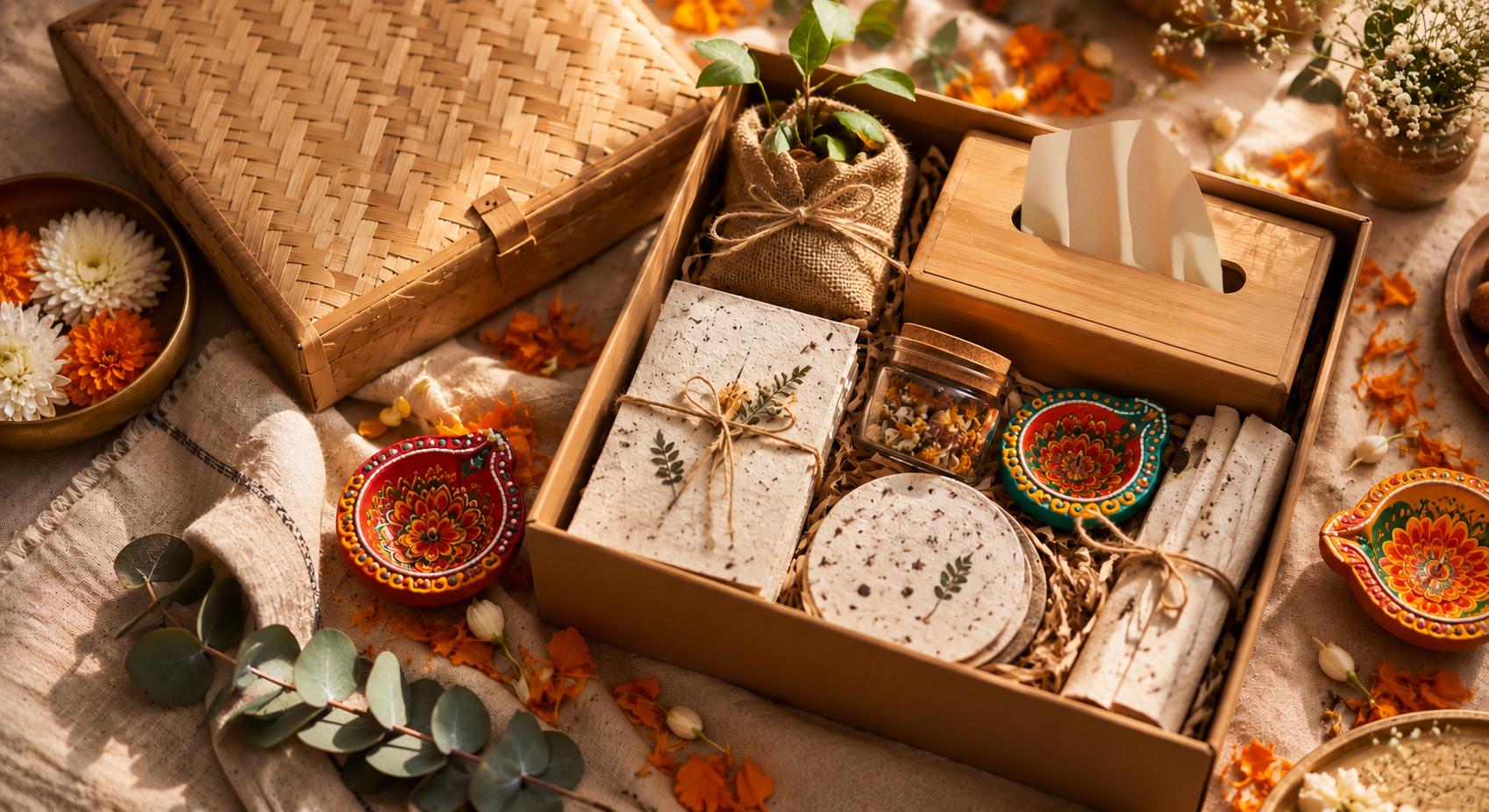
Seed paper is paper made with seeds incorporated into its structure. After the card has served its purpose, it can be planted in soil under suitable growing conditions.
With appropriate moisture, light and care, the paper can break down while viable seeds have the opportunity to germinate.
This gives a conventional business card a potential second life.
Instead of simply being a piece of printed information, the card becomes something that can be planted, experienced and remembered.

Why are businesses exploring seed paper cards?
1. They make sustainability visible
Many companies have sustainability goals, but sustainability can sometimes remain an internal exercise — something reflected in policies, reports or procurement decisions that customers never see.
A seed paper card makes the material choice visible.
The person receiving the card can immediately understand that it is different from a conventional business card and that it has been designed with its end-of-use in mind.
For sustainability-focused companies, environmental organisations, hospitality businesses, event companies and conscious brands, this can be particularly relevant.
2. They rethink the idea of “waste”
The traditional linear model is simple:
Make → Use → Dispose
Seed paper introduces another possibility:
Make → Use → Plant
Of course, planting a card does not automatically make it environmentally superior. The actual impact depends on factors such as the paper fibres used, inks, adhesives, seed viability, packaging and what happens to the product after use.
But the underlying design principle is interesting: consider the next stage of a product before it becomes waste.
This is closely aligned with the broader principles of circular thinking, where products and materials are designed to remain useful for longer.
3. They can make a brand more memorable
Business cards are functional, but they are also branding tools.
A conventional card might communicate:
“Here are my details.”
A thoughtfully designed seed paper card can communicate:
“Here are my details — printed on a card designed to have a second life.”
That creates an opportunity for a more memorable brand interaction.
The experience doesn't have to be elaborate. A simple instruction such as:
“Plant me after use.”
can turn an otherwise disposable interaction into something more engaging.
Where can seed paper identity cards work?
Seed paper cards can be particularly relevant for:
- Sustainability and climate-focused businesses
- Environmental organisations
- Hotels, resorts and hospitality brands
- Conferences, exhibitions and events
- Businesses with sustainability-led branding
- Corporate gifting and promotional campaigns
- Eco-conscious startups and purpose-driven brands
They can also be used beyond traditional business cards — for event tags, thank-you cards, product inserts, appointment cards, loyalty cards and promotional materials.

But is seed paper automatically sustainable?
This is an important question.
No.
The presence of seeds alone does not make a product environmentally responsible.
A more meaningful assessment looks at the complete product:
- What fibres were used?
- Are they recycled or virgin?
- What inks were used?
- Are there coatings, laminations or plastic components?
- Are the seeds viable?
- Is the card actually suitable for planting?
- How is it packaged and transported?
These details matter.
For example, adding a plastic laminate to a seed paper card could undermine its end-of-life purpose. Similarly, calling a product “zero waste” simply because it contains seeds would be an unnecessarily broad claim.
At EkoScrib, we believe sustainability claims should be based on what the product actually contains and how it is made, rather than simply what it looks like.
The seed is not the whole story
There is also an important distinction between plantable and guaranteed to grow.
Germination depends on factors such as seed type, viability, soil, moisture, temperature, sunlight and planting conditions.
Therefore, responsible communication should focus on the card being designed to be planted, rather than promising that every card will successfully produce a plant.
This is particularly important for businesses using seed paper as part of their sustainability communication.
A small change in a very traditional product
The business card may seem insignificant compared with larger sustainability challenges.
And it is.
But that doesn't make everyday choices irrelevant.
Businesses purchase and distribute thousands of small physical items — stationery, packaging, promotional materials, event collateral and printed communications.
Looking at these products through a different lens can create opportunities to reduce unnecessary waste, use recycled or renewable materials and design products with their end-of-use in mind.
A seed paper business identity card is one small example of this approach.
It doesn't replace the need for broader sustainability action.
It simply demonstrates an interesting principle:
The end of a product's first use doesn't necessarily have to be the end of its story.
At EkoScrib, we're exploring paper solutions that bring this thinking into everyday business materials — from recycled paper and unbleached stationery to plantable seed paper and bamboo tissue products.
Because sometimes, the smallest things can carry a bigger message.
Hand over a card.
Leave behind an idea.
And, perhaps, something that grows. 🌱
EkoScrib | Circularity, Rebuilt
Need seed paper visiting cards for your company? Request samples and a quote from EkoScrib.
Continue reading