Seed Paper Wedding Invitations in India: The Card That Grows After the Celebration
Plantable wedding invitations made from recycled cotton seed paper. What to check before ordering, how to plant them, and questions to ask your supplier.

Every Indian wedding begins with an invitation.
Long before the first guest arrives, a card reaches someone's home. It carries the names, dates and blessings, and for a few days, it becomes one of the most important pieces of paper in the house.
Then the wedding happens, and the invitation has served its purpose.
But what happens to the card afterwards?
With wedding season starting, this is a good time to ask this question most families never think about.
India's Wedding Season: A Reason to Rethink Invitations
India's wedding industry operates on an extraordinary scale. According to the Confederation of All India Traders (CAIT), approximately 46 lakh weddings were expected between 1 November and 14 December 2025, generating an estimated ₹6.5 lakh crore in business.
Now consider a simple illustration, not a measured estimate: if each wedding sent just 100 printed invitations, that would amount to 46 crore cards. The actual number could be considerably different, with many weddings also using envelopes, inserts, boxes and decorative elements.
Wedding invitations are an important part of the celebration. But once their purpose is fulfilled, many are stored away or discarded. Cards featuring lamination, foil stamping or other decorative finishes may also be more difficult to recycle.
This isn't about making celebrations smaller. It's about considering how we can make some of the choices surrounding them more thoughtful.
A Wedding Card That Needn't End Up in a Drawer
Indian wedding invitations often feature religious imagery, auspicious symbols and sacred verses. For some families, discarding these cards feels uncomfortable, so they remain stored for years.
Seed paper offers an alternative worth considering.
Rather than simply disposing of the invitation, recipients can plant it in soil under suitable conditions. The paper can break down naturally, giving its embedded seeds an opportunity to germinate.
It's a different way to think about the end of an invitation's life.

What Is Seed Paper?
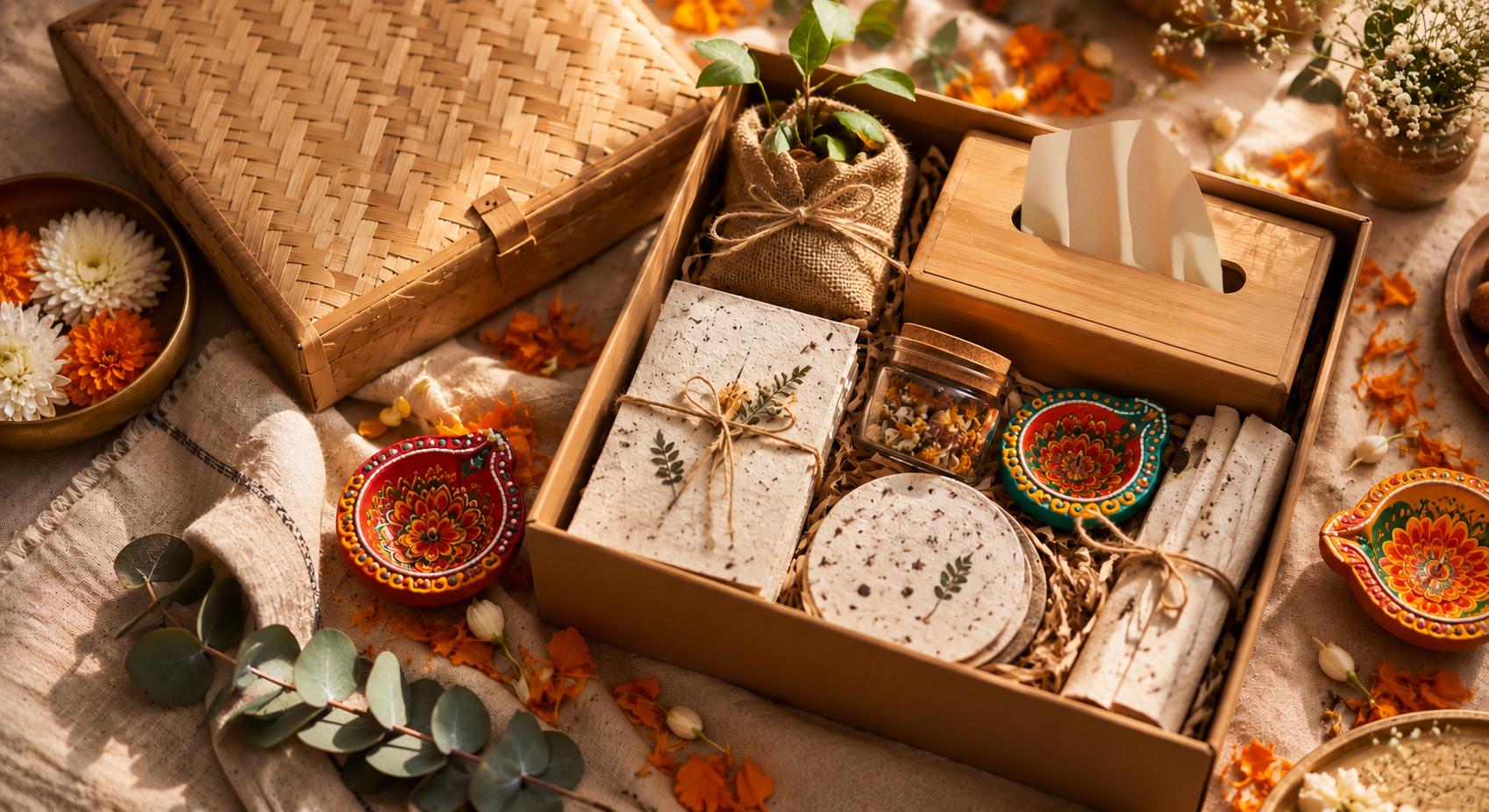
Seed paper is paper made with seeds incorporated into its fibres during production. It typically has a natural, textured appearance that gives each sheet a distinctive character.
At EkoScrib, our seed paper is handmade using recycled cotton waste and embedded with non-GM seeds.
After the invitation has been read and enjoyed, it can be planted in soil. With suitable moisture, sunlight, temperature and care, the paper can break down and the seeds may germinate.
The idea is simple: give a familiar paper product another possible purpose after its original use.

How to Plant a Seed Paper Invitation
Planting seed paper is straightforward, although the exact method depends on the seeds used.
- Moisten: Tear the card into smaller pieces and soak them in water, following the supplier's instructions.
- Plant: Place the moist paper in suitable soil pot and cover it with a thin layer of soil, as recommended for the particular seed variety.
- Water and care: Keep the soil appropriately moist and provide suitable sunlight and temperature conditions.
Germination times vary depending on the seed variety, season and growing environment. Follow the instructions supplied with your card for the best chance of success.
Why Consider Seed Paper for an Indian Wedding?
1. A keepsake with a second purpose
Wedding invitations are often treasured for their sentimental value. A plantable invitation introduces another possibility: instead of remaining stored indefinitely, it can be planted after the celebration.
2. A thoughtful conversation starter
Unconventional materials naturally invite curiosity. Guests may want to know what the card is made from and how it can be planted, creating an opportunity to introduce more thoughtful material choices.
3. An alternative for sustainability-conscious celebrations
For couples who are already considering recycled decorations, reusable wedding elements or digital invitations, seed paper can complement their approach to reducing unnecessary waste.
4. A way to rethink traditional stationery
Seed paper can be used for wedding invitations, save-the-date cards, thank-you notes, favour tags and other event stationery. Families can choose where it makes the most sense rather than replacing every printed item.

What to Know Before Ordering Seed Paper Invitations
Seed paper has different characteristics from conventional machine-made cardstock. A little planning can help you get the best results.
Printing and design: Seed paper can be printed with customised designs to suit your wedding theme. Choose your preferred design, colours and typography to create invitations that reflect your style.
Finishes: Avoid plastic lamination and coatings that could interfere with planting or biodegradation. Ask your supplier about the finishes used.
Seed selection: Ask which seeds are embedded and whether they are suitable for the locations and seasons in which recipients are likely to plant them.
Timing: Handmade production may require additional lead time. Order early enough to review samples and finalise your design.
Storage: Keep invitations dry and follow the supplier's storage recommendations to help preserve seed viability.
Budget: Handmade seed paper may cost more than standard machine-made cards. You could use it for selected invitations, inserts, envelopes or thank-you cards while sharing other communications digitally.
Questions to Ask Your Seed Paper Supplier
Before placing an order, ask:
- What fibres are used to make the paper?
- Which seeds are embedded, and are they non-GM?
- Are the seeds suitable for my intended planting location?
- Which inks, coatings and finishes are used?
- Can I review a printed sample before ordering?
- Will you provide planting and care instructions?
A reliable supplier should be transparent about the materials, production process and limitations of the product.
Frequently Asked Questions
Can seed paper wedding invitations be printed?
Yes. Printing is possible, although results depend on the paper texture, printing method, ink and design. Always request a sample.
How long does seed paper take to germinate?
There is no universal timeframe. Germination depends on the seed variety and growing conditions. Follow the supplier's instructions.
Will seed paper grow in every climate?
Not necessarily. Seed selection, local climate, season and care all influence germination. Choose seeds suited to the intended planting location.
Are seed paper invitations environmentally friendly?
They can offer an alternative to conventional invitations, particularly when made with recycled fibres and without unsuitable coatings. However, their overall environmental impact depends on the materials, manufacturing, packaging, transport and end-of-life conditions.
An Invitation to Think Differently
An invitation welcomes someone to share a special moment. It carries a message, represents a family and becomes part of a celebration.
Choosing seed paper doesn't change that purpose. It simply introduces another consideration: what happens to the material after the occasion has passed?
Not every wedding needs to change every tradition. Sometimes, a more thoughtful choice in one small detail is a meaningful place to begin.
Because celebrating a new beginning can also be an opportunity to rethink what we leave behind.
At EkoScrib, we offer recycled seed paper and sustainable paper solutions for invitations, events and everyday business needs. Our seed paper is handmade using recycled cotton waste and embedded with non-GM seeds.
To enquire about samples or customised stationery, email inquiry@ekoscrib.com or visit ekoscrib.com.
EkoScrib | Circularity, Rebuilt.
Planning your wedding invitations? Request samples and a quote from EkoScrib.
Continue reading